Our poster line has always been the same five words: an indie anti-romantic comedy. It usually gets a laugh, and then it gets a question. If a movie has a love triangle, a nervous first date and a heroine looking for her first boyfriend, what exactly makes it anti-romantic? Here is our answer, along with a few films that walked the same road before us.
The rom-com formula, in one paragraph
Most romantic comedies run on a well-worn engine. Two people meet in a memorable way. Something keeps them apart: a misunderstanding, a rival, a job in another city, a secret. One of them makes a grand gesture, often involving a sprint through an airport or a speech in front of strangers, and the film ends at the moment the couple finally becomes a couple. The promise underneath is simple: the right person exists, and finding them will fix whatever was wrong.
There is nothing wrong with that engine. It has powered wonderful films for the better part of a century. An anti-romantic comedy keeps most of the parts and points them somewhere else.
Classic rom-com vs. anti-romantic comedy
| Element | Classic rom-com | Anti-romantic comedy |
|---|---|---|
| The goal | Win the right partner | Figure out what you actually want |
| The meet-cute | A charming accident that feels like fate | Awkward, or built on a fantasy that will not survive meeting the real person |
| The rival suitor | Clearly the wrong choice | Often just as decent as the "right" one |
| The grand gesture | Proves that love is real | Is questioned, misfires or never comes |
| The ending | The couple, together at last | A person who has changed, with or without a partner |
| The message | Romance completes you | Romance is one good thing among several |
Five signs you are watching an anti-romantic comedy
- The romance is the question, not the prize. The film keeps asking whether the relationship is a good idea, and it allows the answer to be no.
- The real love story is with the self. The character's arc is about confidence, independence or honesty, and a partner is not handed out as a reward for growing up.
- Awkwardness is the point. Instead of polished banter you get pauses, misread signals and people saying the wrong thing at the worst moment. One reviewer praised our film for its "host of glorious awkwardness," and we took that as a badge of honor.
- Fantasy runs into reality. Someone falls for an idea of a person, and the film shows what happens when the actual person turns up.
- The ending resists the clinch. The last scene might be a breakup, a goodbye or a person walking out into the world alone and looking happier for it.
A short family tree
The anti-romantic comedy is not a new invention. It has a long and funny lineage, and a few titles come up again and again when people talk about it.
- Annie Hall (1977). Woody Allen's Best Picture winner looks back on a relationship that is already over. It is fond of Alvy and Annie, but it is about why they did not last, not how they got together.
- My Best Friend's Wedding (1997). Julia Roberts plays a woman determined to break up her best friend's wedding. She wins the audience. She does not win the groom, and the film ends with her dancing at the reception with a different friend.
- Me and You and Everyone We Know (2005). Miranda July's debut is a gentle, strange film about lonely people reaching for each other. A critic at Hammer to Nail compared Liz Manashil's script to it, which we still count as one of our favorite compliments.
- (500) Days of Summer (2009). Marc Webb's film tells its story out of order and warns the audience at the very start that this is not a love story. It then spends ninety-odd minutes showing a young man confusing his fantasy of a woman with the woman herself.
How Bread and Butter plays the game
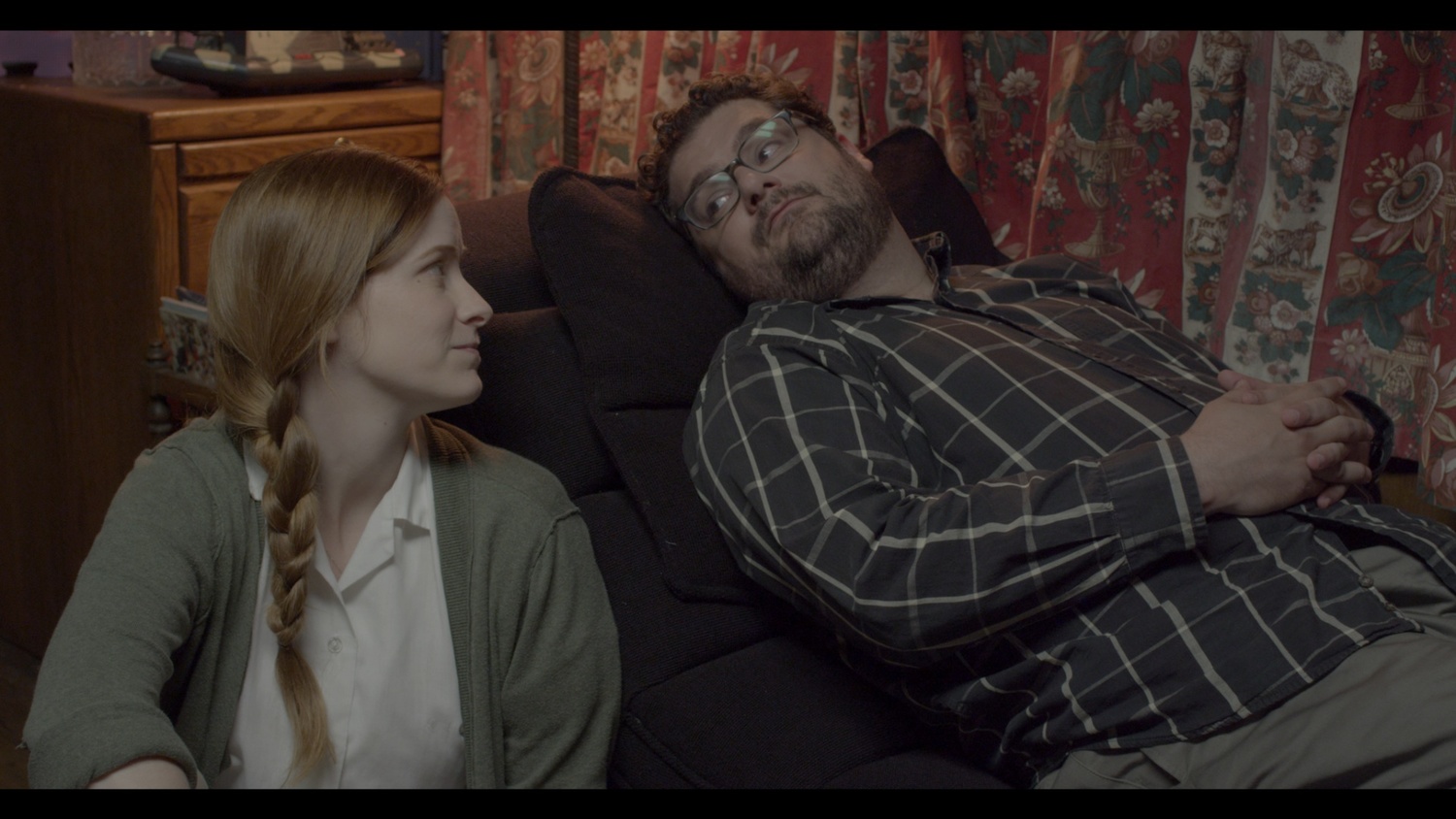
Amelia Karinsky is thirty and has never had a boyfriend. She works as the receptionist for Dr. Wellburn, an eccentric life coach with a doctorate in Scandinavian literature who would like you to call him Doctor anyway, and her parents would happily run every part of her life. When her boss pushes her to go looking for a soulmate, two possibilities appear at once.
One is Leonard, the stranger whose pencil notes fill the margins of a used book she buys. She is in love with him before they have even met. The other is Daniel, a kind, introverted client of her boss, played by Bobby Moynihan, who shares a lot of her fears and quirks. In a classic rom-com the story would be about which man she picks. In ours, the question itself becomes the problem. Leonard turns out to be dealing with something very un-magical, clinical depression, and Daniel's sincere courtship teaches Amelia that a real relationship is far more frightening than the one she had imagined.
Our logline puts it plainly: the film chronicles how she learns that independence is more important than a mismatched romance. That is the anti-romantic turn. The comedy comes from Amelia trying to follow the romantic script, and the heart comes from her realizing she does not have to.
Is anti-romantic the same as cynical?
No, and this is the part people most often get wrong. A cynical film sneers at love. An anti-romantic comedy takes love seriously enough to be honest about it. It likes its characters, including the suitors who turn out to be the wrong fit. The Cleveland International Film Festival's program note described our film as an upbeat comedy "about looking for love, thinking of romance, and finding yourself," and that is about as good a summary of the whole genre as we have read.
If you find yourself rooting hard for one of the men, we love that. A good anti-romantic comedy leaves room for the audience's own romantic hopes. It simply does not promise to fulfill them. If you want to dig into that tug of war, we wrote about why we root for both sides of a love triangle.
Why the label matters
Calling the film an anti-romantic comedy was partly a warning and partly an invitation. If you sit down expecting a wedding at the end, you may feel cheated. If you know from the first frame that this is a story about a woman learning to choose herself, every awkward date becomes part of that journey, and the jokes land differently. Labels set expectations, and expectations shape how a comedy plays in a room full of strangers.
If the genre is your thing, our list of indie rom-coms to watch after Bread and Butter is a good next stop, and the cast and crew page shows who brought Amelia's story to the screen.